TL;DR — Split by job, neither tool sweeps the board. LastSwab Beauty ($12) takes edge correction and mid-day spot fixes. The seven-round LastRound Original set ($16) takes full-face removal. Bare fingertips take toner, and the eye area needs both. So for a full routine the honest buy is both tools, bought separately at $28. The honest buy is not the $33 Zero-Waste Makeup Kit, which contains exactly those two products and nothing else.
All LastObject prices in this article are the listed prices at LastObject's US store, read 18 August 2026; third-party prices carry their own retailer and date.
Figure 1 — How five makeup jobs divide between LastRound, LastSwab Beauty and no tool
LastRound and LastSwab Beauty split a makeup routine almost down the middle — and one of the five jobs is won by neither of them. Across the five jobs a face-cleansing routine actually contains, the pointed swab ($12) wins two outright. The seven-round Original set ($16) wins one, and bare fingertips win one. The fifth job, the eye area, splits between the two products. That is why the useful answer to "LastRound or LastSwab Beauty" is normally both. What is not true, at the prices listed, is that the bundle is the cheaper way to own them.
One scoping note before the table: this article divides the routine by job. The biggest single job — taking a full face of makeup off — has its own dedicated comparison that goes deeper on that one task than an overview can. Read that piece if full-face removal is the question you arrived with; read on here if you want the whole routine mapped.
The criteria were fixed before the table was filled in: surface area, material, tip geometry, and cost per use over time. Every square below is decided by a published specification or a cited source, not by preference — and both of our tools lose squares.
The five jobs
| Job | Winner | Deciding spec | What the winner loses on |
|---|---|---|---|
| Full-face makeup removal | LastRound | Seven rounds per set, each about 7 cm across — the same as a standard disposable round — in an absorbent 30% cotton / 70% lyocell blend, both per LastObject's own product page | A used round is damp and has to go somewhere. Away from a washing machine, this is the weaker tool. |
| Eye area | Split | Broad round for sweeping the lid and lash fringe; a swab tip millimetres across for the lash base itself | LastRound cannot reach the lash base without dragging across thin skin; LastSwab Beauty covers almost no area. |
| Edge correction (liner, wing, mascara flick) | LastSwab Beauty | Non-porous TPE tip — LastObject states it does not absorb and retain bacteria, so it lifts pigment off skin instead of soaking it up | Useless for removal. It clears a millimetre at a time. |
| Toner or essence | Bare fingertips | Nothing is retained: a textile round keeps some of every pour, fingers keep none — and the American Academy of Dermatology's published cleansing guidance describes applying a gentle cleanser with the fingertips rather than with washcloths, sponges or other tools | Fingers spread toner but lift nothing; a damp round also wipes away what the cleanse left behind. |
| Mid-day spot fix | LastSwab Beauty | Non-porous tip picks up and puts down; a woven round holds onto pigment once it has taken it | Nothing to hold cleanser in — it moves product, it does not remove much. |
Two for the swab, one for the round, one for neither, one shared. LastObject's own kit page puts the same two tools together: it states that the Beauty Kit pairs LastSwab Beauty and LastRound.
Why the squares fall where they do
The three specs that decide this comparison are diameter, material, and tip shape — and they are not interchangeable.
Diameter decides the removal jobs. A round face of fabric measured in centimetres moves foundation across a cheek in one pass. A swab tip measured in millimetres does not, no matter how many passes you give it.
Material decides the direction of the transfer. LastObject describes LastRound as a set of seven pads in a 30% cotton / 70% lyocell (wood fibre) blend. The same page lists them as machine washable at up to 60 °C and rated at roughly 250 wash cycles per pad. That is an absorbent cellulose textile: it is built to take things in. The swab tip is TPE, a non-porous elastomer. LastObject states that it does not absorb and retain bacteria. That is exactly why it can pick a smudge up off skin and then release it onto a tissue instead of drinking it. Absorbency is a feature for removal and a bug for correction.
Tip shape decides everything at the lash line. The American Academy of Ophthalmology's patient-education page on eye makeup describes using a clean swab along the base of the eyelashes to lift the last resistant debris. That is described generically, not as an endorsement of any product. But it is the clearest professional statement that this job has its own tool. It is also the reason the eye-area row splits rather than resolving. The precision half of that job is covered in depth in our eyeliner-fix cluster, including a straight comparison of a precision tool against a bare fingertip.
Cost per use, over time
This is where reusables earn their keep, so it is worth doing the arithmetic openly rather than quoting a marketing number.
Figure 2 — What one LastRound set contains

The disposable baseline: a 100-count pack of store-brand cotton rounds is listed at about $2.14 at Walmart.com, read 18 August 2026. That is roughly 2.1 cents each. The retailer notes that prices vary by location and channel. Against that, a $16 LastRound Original set breaks even at roughly 760 disposable rounds — our own division, not the brand's. At two rounds a day that is about thirteen months; at three rounds an evening, closer to eight and a half. One caveat we will not hide: the retailer's page is behind a bot check, so that price comes from its search listing rather than the product page itself. Treat the break-even as approximate.
LastObject's own figure is more aggressive. The brand states that one set of seven replaces approximately 1,750 single-use cotton rounds over its lifetime. Its refill page repeats the same 1,750 figure. That number is the brand's own arithmetic — seven pads multiplied by 250 wash cycles — and it assumes one disposable displaced per wash. It also excludes water, detergent, and machine time. Treat the ~760-round break-even as the conservative floor and LastObject's 1,750 as its ceiling claim.
LastSwab Beauty is $12, against a stated design life of 1,000-plus uses, and LastObject puts the disposables displaced at roughly 365 per year of daily use. That works out to about 1.2 cents per use on the brand's numbers. LastObject also publishes a life-cycle assessment carried out to ISO 14040/14044. It puts the swab's environmental impact 8.3 times lower than disposable swabs across all 22 assessed categories, with break-even at 35 uses. That assessment is the brand's own published document, not an independent audit of it.
The bundle math does not work — check before you click
Here is the uncomfortable one, and it concerns our own store.
The Zero-Waste Makeup Kit is listed at $33. LastRound at $16 plus LastSwab Beauty at $12, both, is $28. The kit is five dollars more than buying the two products separately.
And there is no third item to explain the gap. The kit page names its contents outright. It states that the Beauty Kit pairs LastSwab Beauty and LastRound. So what arrives in the kit is exactly what you would have bought on its own.
So the practical rule is: if you want one round set and one swab, buy them separately for $28. Take the kit for the packaging or as a gift if you want it, with the five dollars counted honestly as what it is. Anyone telling you a bundle is automatically the cheaper route has not read the two price tags — and that includes us, if we ever say it.
Where each tool is the wrong choice
Four situations where the reusable round is the worse choice, the recurring cost it carries, and then the swab's own no-go list.
Acne-prone or actively irritated skin. The American Academy of Dermatology's published acne skin-care guidance describes choosing a gentle, non-abrasive cleanser and applying it with the fingertips. The reason it gives is that scrubbing with washcloths, sponges, and other tools can irritate skin. Described as written, that guidance does not distinguish between a reusable round and a disposable one. A cotton round is one of the tools, and it counts against ours exactly as much.
Nail polish and acetone. LastObject's own care line for the rounds, published on its LastRound Refill page, is not to use bleach or harsh solvents. Acetone is not named there, but nail-polish remover is a solvent, and the brand's stated care points away from it rather than toward it. Regenerated cellulose is chemically inert to acetone as a fibre, but that says nothing about dyes and finish, and the brand carves out no exception. A disposable is the safer assumption for polish removal.
Travel without laundry. Seven rounds plus a wash cycle is a home system. A week away with no machine ends with seven damp used rounds in a bag. The swab, with its case, travels better than the rounds do.
Broken skin or a shared bathroom. When skin is broken, or when a tool would pass between people, a single-use item avoids the question entirely. We have no published standard to point at for that one, so take it as our own reasoning rather than a sourced rule.
And the wash debt — the one honest cost a disposable does not carry. A round only stays hygienic if it is laundered. The temperature, detergent, and drying step all matter. The 2025 home-laundering evidence is unpacked in Machine-Washing Reusable Cotton Rounds, including the single wash-and-dry combination that failed its hygiene benchmark. The routine that protects the pads' rated 250 cycles is in LastRound Care.
Finally, the swab has its own list. LastObject states plainly that it is not intended for cleaning inside the ear canal — the Beauty version is a makeup tool. It also removes nothing at scale: for taking a full face of foundation off it is the wrong shape by an order of magnitude. And its end-of-life is the weakest thing about it: LastObject gives the tip as TPE, the stem as polypropylene and the travel case as ocean-bound plastic. All plastic, durable rather than degradable. It earns its place on precision and on the disposables it displaces, not on what happens to it afterwards.
The material, stated precisely
LastRound is 30% cotton and 70% lyocell by LastObject's own stated composition — regenerated cellulose from wood pulp, not plastic. There is no microplastic argument to make against it. Independent marine work published in PLOS ONE in 2023 found that natural and regenerated cellulose textiles biodegraded completely in about 35 days in seawater. The same study found that PLA showed no disintegration for over 428 days. The paper reported the same absence of degradation for polypropylene and PET. That is seawater, though, not a compost bin.
LastObject additionally describes spent rounds as home compostable at end of life. Its refill page repeats that the rounds are compostable at end of life and home-compostable once fully spent. Neither page names a certification standard or a testing house for that claim. The OEKO-TEX certification the refill page does name is a textile certification. It says something about what is in the fabric, not about how it breaks down. So it is not evidence for the compost line, and we are not going to present it as such. The compost claim therefore stands as the brand's wording, uncertified. We are equally not going to score a home-compost claim against an industrial composting standard. That would be the wrong yardstick in the other direction. The seawater result is what is independently documented; the compost line is not.
The swab does not get the same defence. Its tip is TPE and its stem is polypropylene — both plastic, both durable rather than degradable.
The verdict
Two jobs to the swab, one to the round, one shared, and one won by no product at all. Buy LastRound if the bulk of your routine is removal and eye-area sweeping — and read the dedicated full-face comparison if that one job is your whole question. Buy LastSwab Beauty if what actually ruins your morning is a wing that went wrong. Buy both — separately, for $28 — if your routine contains all five jobs, which most do. The round is the weaker choice on acne-flared skin, on nail polish, and on a week away from a washing machine. And on toner, the cheapest tool took the row: fingers, which we do not sell.
Related reading: how to choose the best reusable makeup remover pads.
If you are switching, our reusable cotton pads are a set of seven that go in an ordinary wash.
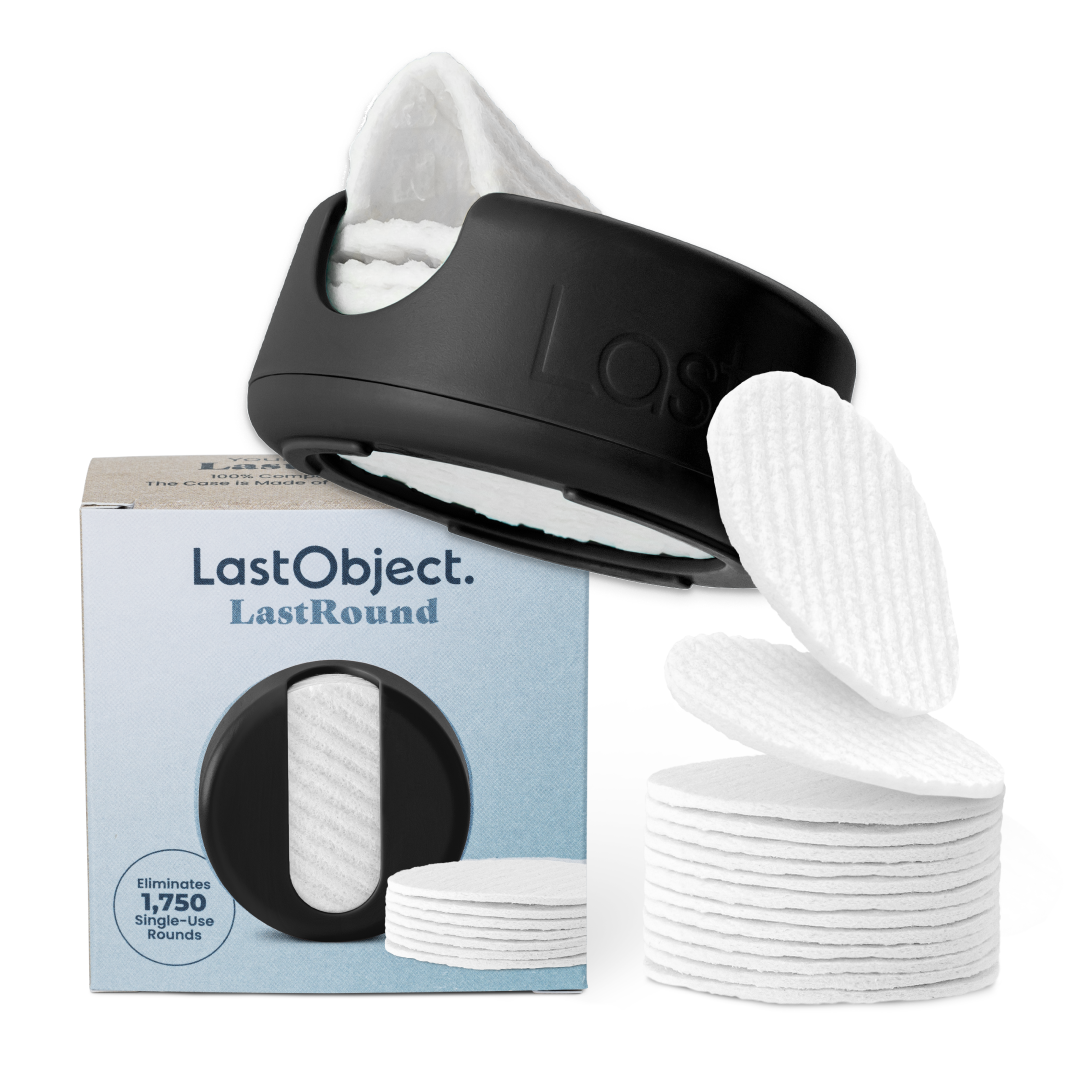
LastRound
$16.00 · LastObject US store
Seven pads, each about 7 cm across — the diameter of a disposable round. Wins full-face removal in this comparison; loses toner to bare fingertips and the lash line to a pointed tip.
See LastRound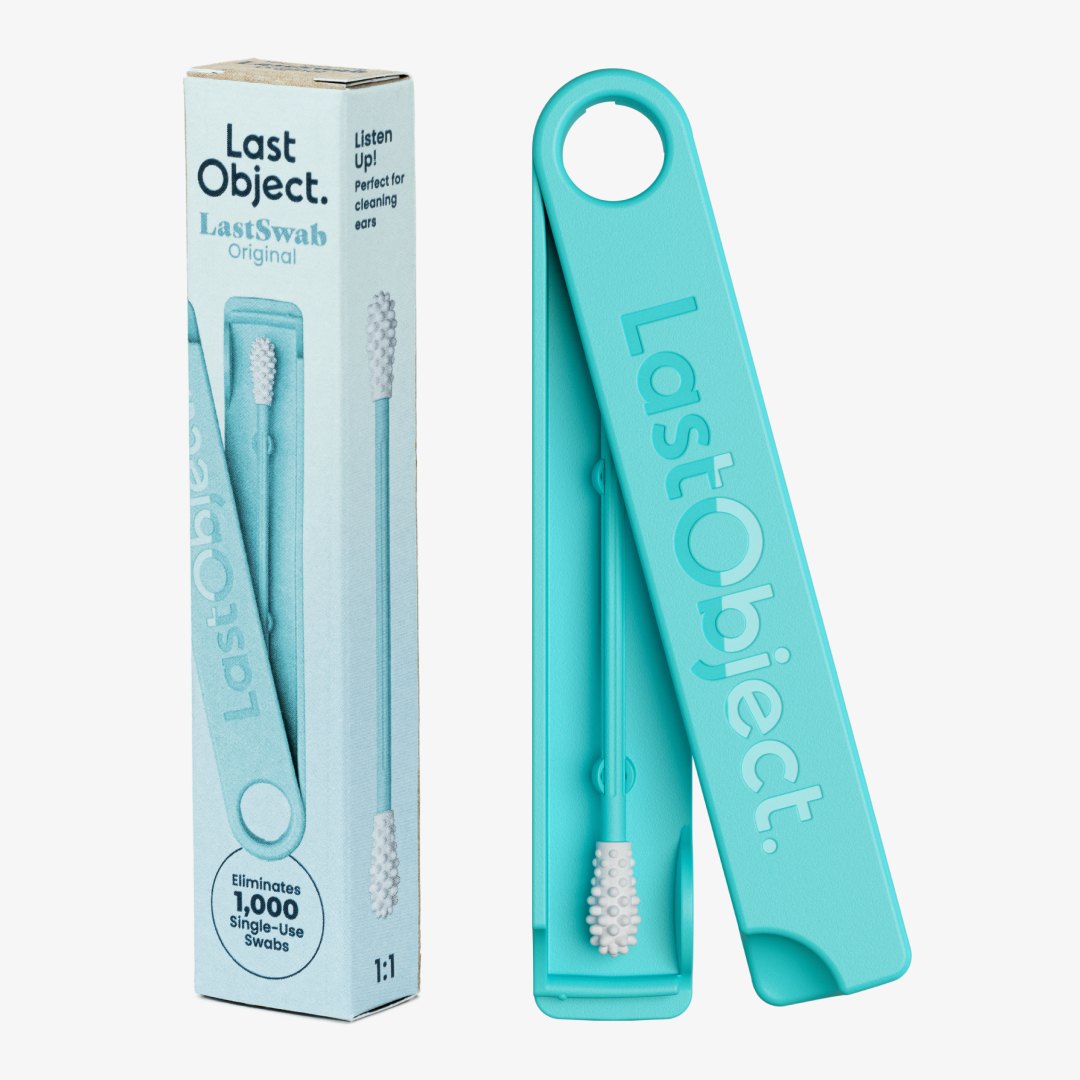
LastSwab Beauty
$12.00 · LastObject US store
A pointed non-porous tip. Wins edge correction and mid-day spot fixes here; it clears a millimetre at a time, so it is the wrong tool for taking a face off.
See LastSwab Beauty